Emergency Medical Insurance for Travel Abroad: Why It’s Essential and How to Choose the Right Plan
Traveling abroad is exciting—new cultures, food, experiences, and memories. But what most travelers don’t think about is what happens if you suddenly fall sick or get injured in another country.
A single emergency hospital visit overseas can cost thousands of dollars, sometimes more than your entire travel budget.
That’s where emergency medical insurance for travel abroad becomes not just useful—but absolutely essential.
In this guide, you’ll learn:
What emergency medical travel insurance is
What it covers (and what it doesn’t)
Why it’s critical for international travel
How to choose the best policy
Common mistakes travelers make
Who needs it the most
Whether you’re a tourist, student, digital nomad, or business traveler, this article will help you make a smart and safe decision.
What Is Emergency Medical Insurance for Travel Abroad?
Emergency medical insurance for travel abroad is a type of travel insurance that covers unexpected medical expenses while you’re outside your home country.
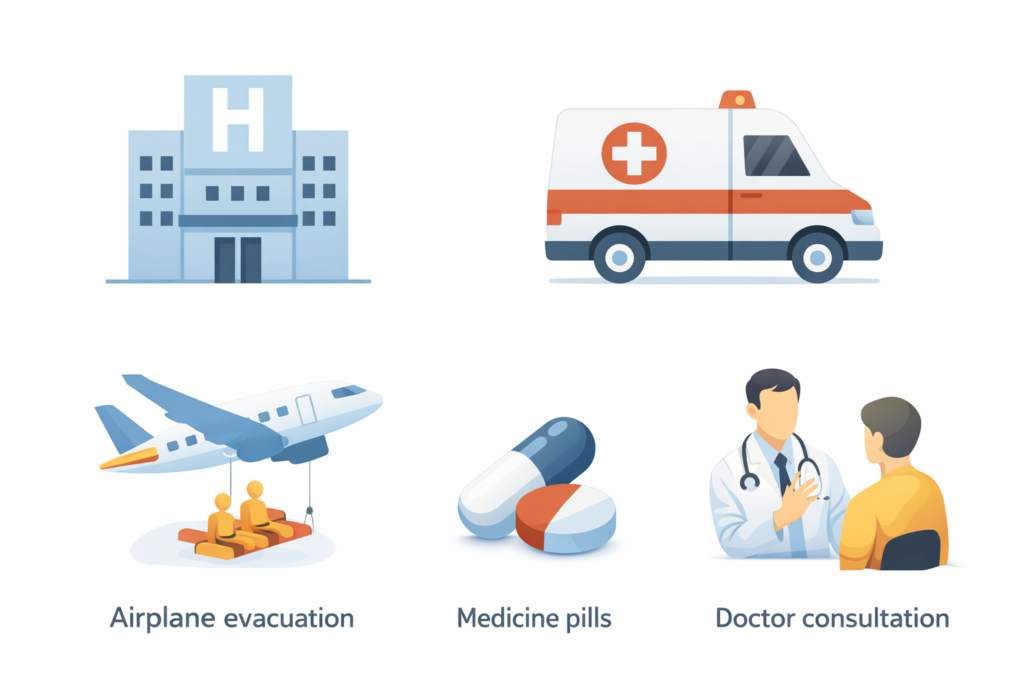
It typically covers:
Emergency doctor visits
Hospitalization
Surgery
Prescription medications
Emergency medical evacuation
Repatriation (returning you home for medical reasons)
Unlike regular health insurance, most domestic health plans do NOT cover international medical costs.
If you get sick in another country without coverage, you’ll usually have to pay upfront—sometimes before treatment even begins.
Why Emergency Medical Insurance Is Crucial When Traveling Internationally
1. Overseas Medical Costs Are Extremely High
Many travelers assume healthcare abroad is cheap. That’s not always true.
Examples:
Emergency room visit in the USA: $2,000–$5,000
Hospital stay in Europe: $1,000+ per night
Emergency evacuation by air ambulance: $30,000–$100,000
Without travel medical insurance, these costs come directly from your pocket.
2. Your Regular Health Insurance May Not Work Abroad
Most local or employer-provided health insurance plans:
Do not cover international treatment
Require reimbursement (you pay first)
Exclude emergency evacuation
Emergency health insurance for travelers fills this dangerous gap.
3. Emergencies Are Unpredictable
No one plans to:
Slip on wet stairs
Get food poisoning
Have an asthma attack
Be injured in an accident
But emergencies don’t ask permission—especially when you’re in a new country.
What Does Emergency Medical Travel Insurance Cover?
Coverage varies by provider, but most good plans include:
✔️ Emergency Medical Treatment
Doctor consultations
Hospital stays
Surgery
Diagnostic tests
✔️ Emergency Medical Evacuation
If local facilities can’t treat you, insurance covers:
Air ambulance
Transfer to another hospital
Transportation to your home country if necessary
✔️ Repatriation of Remains
In the worst-case scenario, costs related to returning remains home are covered.
✔️ Prescription Medications
Emergency medicines prescribed by a doctor.
What Is NOT Covered? (Important!)
Even the best international travel insurance has exclusions.
Common exclusions:
Pre-existing conditions (unless declared and approved)
Cosmetic procedures
Routine check-ups
Injuries from illegal activities
Extreme sports (unless add-on coverage)
👉 Always read the policy wording carefully.
Who Needs Emergency Medical Insurance for Travel Abroad?
1. Tourists and Vacation Travelers
Even short trips can turn costly if something goes wrong.
2. Students Studying Abroad
Many universities require proof of medical insurance.
3. Business Travelers
Tight schedules + stress = higher health risks.
4. Digital Nomads & Long-Term Travelers
Longer stays increase the chance of medical needs.
5. Elderly Travelers
Higher age = higher medical risk and cost.
How to Choose the Best Emergency Medical Insurance for Travel Abroad
1. Check Coverage Limits
Recommended minimum:
Medical coverage: $100,000+
Evacuation: $250,000+
2. Look for Cashless Hospital Networks
This allows hospitals to bill the insurer directly.
3. Worldwide Coverage
Ensure it covers all countries you plan to visit.
4. 24/7 Emergency Assistance
Critical during emergencies in different time zones.
5. Pre-Existing Condition Options
Some insurers offer coverage with extra premiums.
Single-Trip vs Multi-Trip Medical Insurance
Type
Best For
Single-trip
One-time vacations
Multi-trip / Annual
Frequent travelers
Long-term
Students & digital nomads
Choose based on travel frequency, not price alone.
Common Mistakes Travelers Make
❌ Buying insurance after leaving the country ❌ Choosing the cheapest plan without reading coverage ❌ Ignoring evacuation coverage ❌ Not declaring medical history ❌ Assuming credit cards provide full medical insurance
Cheap insurance can become the most expensive mistake of your trip.
Emergency Medical Insurance vs Travel Insurance: What’s the Difference?
Travel Insurance = Trip cancellation, baggage, delays + some medical
Emergency Medical Insurance = Focused, higher medical coverage
👉 For international travel, medical-focused coverage is non-negotiable.
Final Thoughts: Travel Smart, Travel Protected
No destination is worth risking your health—or your financial future.
Emergency medical insurance for travel abroad is not just paperwork; it’s:
Peace of mind
Financial protection
Access to quality healthcare anywhere in the world
Before you board your flight, make sure your adventure is protected—not just planned.